Latest Movie :
Recent Movies
Mostrando postagens com marcador 4 stars. Mostrar todas as postagens

Busanhaeng (2016) - Review in english

Horror movies were never the same after the zombie trilogy by the director George Andrew Romero. In Night of the Living Dead (1968) we were presented to zombies who eat human flesh, a thriller mixing horror and social criticism. In the second film, Dawn of the Dead (1978), besides the social satire about paranoia and humanity to the brink of apocalypse, the movie explores the comic potential of zombies, especially black humor. We are the headless and cannibalistic beings who roam the cities. Closing the trilogy, Day of the Dead (1985) continues with the social criticism and the comic tone, but relies on a more depressive and gloomy scenario, apart from the use of graphic violence. Following the footsteps of George Romero we have the gore Braindead (1992), the horror 28 Days Later (2002) and Rec (2007), and in humor genre, Shaun of the Dead (2004), Zombieland (2007) and Død snø - Dead Snow (2009).

The South Korean movie Busanhaeng (original title) or Train to Busan (english title) focuses on horror and action, with some moments of suspense. Written and directed by Sang-ho Yeon (known for the zombie animation Seoul Station - 2016), the film tells the story of a financial sector executive, Seok Woo (played by Yoo Gong, known for Do-ga-ni - Silenced - 2011) who agrees to travel with his daughter, Soo-an (represented by Soo Kim-an), from the capital Seoul to the city of Busan for she spends some time with her mother (Seok's ex-wife). After embarking on a modern express train (KTX) passengers discover that an epidemic is raging South Korea, turning much of the population into zombies. With an infected person on board and the disease rapidly spreading, father, daughter and other passengers will have to fight for survival and for their lives, trapped inside a high-speed moving train.


The director Sang-ho Yeon does a great job, managing to immerse the viewer in the plot. Despite most of the action been set in a train the film has a dynamic narrative and impresses for its visual and technical accuracy. Unlike the slow zombies of George Romero's trilogy in Train to Busan they are extremely agile, threatening and lethal. Another highlight is the cast. The characters are well developed, even for a horror movie and the actors deliver relevant performances, especially Sang Hwa (played by Dong-seok Ma, known for Joheunnom nabbeunnom isanghannom - The Good, The Bad, The Weird - 2008), the girl in the role of the daughter, Soo-an Kim, and Yoo Gong acting as the father. The soundtrack and sound effects are moderate, providing genuine scares.

There are still some elements in the movie of South Korean culture, as the obsession with education and study, and a strong critique of modern society. The quest for professional success even at the expense of family and leisure time is questioned in the film, as well as the social tension. Moral and ethical conflicts involving empathize or not for others and follow or not the animal instinct of self-preservation are exploited by different profiles of the surviving passengers.

Despite having some cliches of the zombie genre Busanhaeng is a great horror film, with good moments of suspense, well-constructed action scenes, a well-chosen cast and the right amount of tension to captivate the viewer.



Original title: Busanhaeng
English title: Train to Busan
Director: Sang-ho Yeon
http://www.imdb.com/title/tt5700672/


The One I Love (2014) - Review in english

Some movies can show that cinema is not just made of large productions and even with low budget and no major special effects you can produce a great film. This is the case of The One I Love, first feature-film of the director Charlie McDowell. With an original script and filmed almost in one set (a country house), the viewer is captivated by the story and the main characters in such a way that he will wait anxiously for the outcome of the plot. The One I Love reminds us of another great film in the same style that also did not have the proper recognition: Coherence (2013).

The story involves a couple, Ethan (played by Mark Duplass, known for Safety Not Guaranteed - 2012) and Sophie (played by Elisabeth Moss, known for the character Peggy Olson in the TV series Mad Men - 2007-2015), which make therapy to try to overcome the serious marital crisis in which they live. After an unsuccessful attempt to rediscover love through an important and happy time in the past, on the verge of separation, the therapist (played by Ted Danson, known for Saving Private Ryan - 1998) suggests as the last device in attempt to save the marriage of the couple that they spend a weekend in his cottage. What begins as a romantic and fun retreat soon becomes surreal when an unexpected discovery requires both to rethink about themselves, their relationships and their future.


This is the typical movie that the less you know about the plot the better will be your cinematographic experience. Despite being classified as a romance, drama and science fiction, the movie can not be classified in a predominant genre. There are also passages of suspense and mystery in the history. And here we must highlight the work of the director and Justin Lader's great script, who tackles an issue that is not new (marital crisis) in a creative and engaging way. There is a deep approach to the difficulties of living together with someone as well as the expectations that we created with respect to each other and also to the new. There was a concern to keep the two views of the plot (the vision of man and woman) in balance, and the story does not force the viewer to tilt to one side. The soundtrack is subtle and sometimes goes unnoticed, but it sets the tone needed for the various stages of the work.

A curiosity revealed by Duplass (which besides actor is also a director, writer and producer) in this interview, was that although the script has 50 pages and be carefully detailed, both in movement and in which the characters are doing, it doesn't have written dialogue. Thus, each piece of dialogue in the film was improvised. The actors were being as natural as they could with their motivations and the trajectory of the scene and using surprises so that the other does not accommodate, making more spontaneous actions than if they were rehearsing. It is noteworthy that the duo Duplass and Moss delivered fine performances both individually and as a couple. The viewer is involved in the story and have the impression that is watching a actual story with real characters and conflicts.


The title of the film, The One I Love, seems innocent and generic, but gains new connotations when contrasted with the story itself and the movie poster. With a few twists, a clever and intriguing plot and a deliberately open-ending, the movie will leave you thinking about its nuances. This is a film that provokes reflection and certainly will rouse in the viewer the will to go back in the history, whether to contemplates it in detail or to try to get some answers to the questions that were unanswered.   


Original title: The One I Love
Director: Charlie McDowell
http://www.imdb.com/title/tt2756032/


Turist (2014) - Review in english

Winner of the Jury Prize in the Un Certain Regard section at the 2014 Cannes Film Festival, nominated for best foreign language film at the 2015 Golden Globe Awards and nominated (making the early round of shortlist, but was not a nominee) as best foreign language film at 2015 Oscar Awards, the Swedish movie Turist (original title) or Force Majeure (in English) accompanies the emotional drama involving a Swedish family in holiday in the French Alps after an incident with an avalanche.

The story revolves around the couple Tomas (played by Johannes Kuhnke, known for Arven - The Inheritance - 2003) and Ebba (starring Lisa Loven Kongsli, acted in Engelen - The Angel - 2009) and their two sons, Harry and Vera (played by brothers Vicent Wettergren and Clara Wettergren, respectively), which spend the holidays skiing in the French Alps. Everything went well until a controlled avalanche surprised the tourists and the family, who was having lunch in the open air restaurant in the ski station. At the beginning the snow sliding down the mountain does not seem dangerous, but the phenomenon intensifies, provoking a momentary terror among people. The different reactions of Tomas and Ebba facing the imminent danger end up bringing much more devastating consequences than the effect of the avalanche itself. While he rushes out to save his own life, she stays in the place to protect the children.


The writer-director Ruben Östlund (known for De Ofrivilliga - Involuntary - 2008 and Play - 2011) portrays in a dense and deeply way the moral and psychological drama in which the characters are exposed in the plot, addressing sexuality, gender roles in the core family, marital conflicts and social conventions. The man is seen in society as strong and protective, while the woman is sentimental and dependent. There are a number of mechanisms to support these conventions, being problematized and investigated in the course of the film.

Fredrik Wenzel is responsible for picture quality that brings an alpine setting and a series of stunning images. Fixed plans, especially the avalanche scene, and open shots were made with mastery. In contrast to the cold, white and melancholy landscape, human interactions overflow life, being abundant in emotions in discussion scenes. The influence of this hostile environment in the lives of the characters is striking. Day after day we see the different moods of the family members and their emotional consequences, which are accentuated by the soundtrack of intense violin solos. Here it is worth mentioning the excellent performance of the main actors, Lisa and Johannes.

Force Majeure also promotes a reflection on the human behavior in modern society. There is a image confrontation of who we are in the privacy and what we appear to be in social life. Facebook and Instagram are filled with pictures of moments of happiness and success in a frantic search to show that we live a life of perfection. But life is full of imperfections and what defines and distinguishes us is how we deal with them.


The appearance is richer than reality? To which extent people show who they really are to the world, including closer people and intimates? The image we have of ourselves is the same seen from the look of the other? In extreme and high stress situations would we act according to our ethical and moral values ​​or the animal instinct would prevail? These are some of the questions that Force Majeure leaves to reflection.

Original title: Turist
English title: Force Majeure
Director: Ruben Östlund
http://www.imdb.com/title/tt2121382/

Trailer with some spoilers:


Kampen om Tungtvannet (2015) - Review in english


Recieving great reviews and being a success among the public, setting the new record for drama series when it premiered on national TV network in Norway on January 4, 2015, winning the live audience of about 1.2 million viewers on Sunday night (about 24% of the Norwegian population was watching the season premiere), the Norwegian TV mini-series Kampen om Tungtvannet (original title) or The Heavy Water War: Stopping Hitler's Atomic Bomb (in English) depicts a true story of World War II. Narrated in three angles the Norwegian production of 6 episodes follows the trajectory of the Nazi nuclear program, the fight of the Allies to stop them and the management of Norsk Hydro, the company that owns the heavy water plant, a key substance for the German plans.

The TV mini-series begins slowly, developing the characters and their dilemmas and also exploring the reasons Allies and Nazis fight for the heavy water. Why it was so important and where it would be possible to get it? Over the first episodes this whole plot is made clear.


The Nazi research program is shown through the eyes of Werner Heisenberg (played by Christoph Bach, known for Shirley: Visions of Reality - 2013), German scientist who in 1933 won the Nobel Prize in Physics for his contribution in quantum mechanics. Heisenberg devoted his life to science, abdicating social and family life. In 1939 he began working for the German government, conducting the research for the development of nuclear energy. He sees the atomic bomb as a nuisance, but a necessary means for the development of science. The war would be at the service of science.


The Norwegian scientist and professor Leif Tronstad (played by Espen Kloumann Høiner, known for Reprise - 2006) was one of those responsible for the construction of the chemical factory Norsk Hydro, in the Vemork plant on the outskirts of the town of Rjukan in Norway. By joining the Allies in England, he was essential to prevent the success of the Nazi plans, since he was a member of the Norwegian Resistance and still stayed in touch with them. He also was aware of the building plan and the site procedures. To Tronstad the lives of employees and other inhabitants of the area should be preserved in the conflict.


The director of Norsk Hydro, Bjørn Henriksen (played by Dennis Storhøi, known for Zwei Leben - Two Lives - 2012), runs the facility in Rjukan, unique in the world to produce heavy water. As it was a byproduct of fertilizer production, its production was limited and on a small scale. While the Norwegians remained neutral in World War II, France made an agreement with the company to acquire the entire stock of heavy water. But with the invasion of Norway by the Germans, on the morning of April 9, 1940, Norsk Hydro started to meet the Nazi interests in obtaining the precious liquid. To Henriksen the war would be something temporary, so it would be important to keep the jobs and company's business intact.


To give more excitement and make the story more dramatic some fictional characters were drafted, but that did not come to interfere significantly in the actual events that occurred. Among them we can mention Bjørn Henriksen, which was created from three real directors of Norsk Hydro, and his wife, Ellen Henriksen (played by Maibritt Saerens, known for Sykt Lykkelig - Happy Happy - 2010), who also was not part of the original plot, but was responsible for addressing some dilemmas of the couple apart from the moral issues of the war.

Another fictional character is Julie Smith (played by Anna Friel, known for the TV series Pushing Daisies - 2007-2009), who gives life to a British official responsible for the British Special Operations. Here we have to highlight a historical mistake, because in real life the role was played by Scottish Colonel John Skinner Wilson. At that time there were no women occupying the position of command in the army. Despite the good performance of Friel, it would be more appropriate to stick to historical and real facts (put a man) instead of opting for the politically correct of the current times.


The film's director Per-Olav Sørensen depicts in a chronological and historical way the events surrounding the dispute by heavy water. It is noted along the mini-series all the characterization work of an era: uniforms, clothes, cars, equipments and weapons. One bright spot was the maintenance of the three native languages ​​of the countries involved in the plot: Norwegian, German and English. Sørensen also knew how to choose the cast, who gave convincing performances.

The photography is very beautiful and the soundtrack fits well in the plot. However, the director of the mini-series does not do enough to explore more some action scenes and he also could have created more suspense. The rigorous living conditions to which the members of the Norwegian resistance were submitted in missions due to the harsh climate of Norway, as hunger and cold, as well as other difficulties faced when fighting the enemy would have been better dramatized.


This story was also dramatized in a Norwegian docudrama called Kampen om Tungtvannet (Operation Swallow: The Battle for Heavy Water - 1948), in a British production The Heroes of the Telemark (1965), with the participation of Kirk Douglas (citing some of his films: Ace in the Hole - 1951Paths of Glory - 1957The Vikings - 1958 and Spartacus - 1960) and Richard Harris (known for A Man Called Horse - 1970) and a Canadian TV mini-series (A Man Called Intrepid - 1979). The Swedish power metal band, Sabaton, also honored this episode through the music called Saboteurs.


Original title: Kampen om Tungtvannet
English title: The Heavy Water War: Stopping Hitler's Atomic Bomb
Director: Per-Olav Sørensen
http://www.imdb.com/title/tt3280150/


Kampen om Tungtvannet (1948) - Review in english


World War II had several important episodes, but over the years many of them were forgotten or not had due recognition. Besides the famous invasion of Normandy by the Allies, operation known as "D-Day", The Battle of the Heavy Water also played a key role in the outcome of that war. Directed by Titus Vibe-Müller and Jean Dréville in a French-Norwegian co-production, Kampen om Tungtvannet (original title) or Operation Swallow: The Battle for Heavy Water (in English) is a docudrama (documentary drama) that dramatically presented the reconstitution of these events that marked the history of the world and Norway.

The film begins by an introduction to the war and the reasons that led France and Germany to become interested in the heavy water produced only in the chemical factory Norsk Hydro, in the Vemork plant on the outskirts of the town of Rjukan in Norway. The first country was seeking it to do research in laboratories on its effectiveness, while the second was aimed at getting it to build a secret weapon. As the heavy water was a byproduct of fertilizer production, its production was limited and on a small scale, which meant that any amount obtained become of paramount importance. While the Norwegians remained neutral in the war, the Allies were able to catch the first batch of the precious liquid. But with the invasion of Norway by the Germans, on the morning of April 9, 1940, the Nazis ordered the Norsk Hydro plant to increase its production. Realizing the threat that the plant had the British Intelligence in London with the Norwegian Resistance came together to take preventive measures and sabotage Nazi Germany's plans involving heavy water.


Shot in black and white and without the aspects of large productions such as extravagant action situations and melodramatic approach, Kampen om Tungtvannet uses archival footage and reconstructs the other scenes with the participation of real life counterparts. This gives the movie plenty of realism and authenticity, as well as historical and educational features. Among the counterparts actors we can quote the scientists Frédéric Joliot-Curie and Lew Kowarski and most of the Norwegian saboteurs. So few characters were played by professional actors and the four native languages ​​of the countries involved in the plot were kept: Norwegian, French, German and English. And it is exactly by the common aspect that this film stands out, especially when we remember what was at stake at that time. These are not synthetic heroes we find in American blockbusters, they are just ordinary men who risked their lives to prevent the victory of the Nazi Germany.

The photography explores the mountainous region and the harsh climate of Norway through open shots. The rigorous living conditions to which the members of the Norwegian resistance underwent equate to the size of the challenge that was ahead: prevent the Germans build their secret weapon. They faced hunger, cold and also the enemy.


This story was also dramatized in a British production called The Heroes of the Telemark (1965)with the participation of Kirk Douglas (citing some of his films: Ace in the Hole - 1951Paths of Glory - 1957The Vikings - 1958 and Spartacus - 1960) and Richard Harris (known for A Man Called Horse - 1970), and two TV mini-series, a Canadian (A Man Called Intrepid - 1979) and a Norwegian (Kampen om Tungtvannet - The Heavy Water War: Stopping Hitler's Atomic Bomb - 2015). The Swedish power metal band, Sabatonalso honored this episode through the music called Saboteurs.

War is not only won in the trenches or in the battle fronts, being fought by artillery fighting, but by the economic, social and mental mobilization in the rearward. It is won by the adopted strategies and resilience, bravery and wit of all its fighters.


Original title: Kampen om Tungtvannet
English title: Operation Swallow: The Battle for Heavy Water
Directors: Titus Vibe-Müller and Jean Dréville
http://www.imdb.com/title/tt0040504


Málmhaus (2013) - Review in english


Films about family dramas are already common in the movie theater, but the choice of the Icelandic writer-director Ragnar Bragason (known for Bjarnfreðarson - 2009) to put the heavy metal in the foreground was an innovation, so Málmhaus (original title) or Metalhead (english title) stands out compared to other similar narratives. The story shows how the loss of a child in a tragic accident can affect the life of a family and also of a whole small community in rural Iceland. The protagonist of the plot is Hera, played by Þorbjörg Helga Þorgilsdóttir (known for Djúpið - The Deep - 2012), who witnessed the death of her older brother by a tractor when she was only 12 year old, in 1983. Traumatized, disillusioned with life and with her faith completely shaken, she decides to seek comfort in the heavy metal musical style that her brother loved so much.

After this initial introduction, Bragason transports us to the early 90s, addressing the main character already in adulthood. With gloomy and melancholy appearance, always wearing a leather jacket and black clothes, Hera is now quite adept of the black metal way of life. She isolated herself from the outside world and is disconnected from the small community in which she lives. Her only moments of balance seem to be next to her guitar, with which she risks to compose her own musics, or when she listens to her cassette tapes or reads magazines in her room.


The presence of Hera is disruptive to her parents. Unable to break free emotionally and psychologically from the memories of the tragedy, she lives committing petty crimes in self-destructive acts and causing confusion in the neighborhood. Her dressing style and her personality are also a painful form of her parents remember their dead child. This is reflected in the depression of her mother, Droplaug, played by Halldora Geirharðsdóttir (known for Englar alheimsins - Angels of the Universe - 2000 and Hross í oss - Of Horses and Men - 2013), and in the hidden suffering of her father, Karl, interpreted by Ingvar Eggert Sigurðsson (he acted in Englar alheimsins - Angels of the Universe - 2000, Myrin - Jar City - 2006, Hross í oss - Of Horses and Men - 2013 and Everest - 2015). Thus, each one experiences the grief and the pain in their own way, but it is clear that that accident compromised the family's harmony.

With a peculiar intimate view of heavy metal and black metal movements, Bragason does in Metalhead a production with quite personal characteristics, printing throughout the script references carefully cited and associated with the soundtrack. It is through music that the director expresses and exposes the psychological and emotional state of the protagonist, from her feelings to her internal conflicts. Fans of the genre, besides the recognition of the songs, will delight in with Victim of Changes (Judas Priest)Heartless World (Teaze)Run For Your Life (Riot)Strange Wings (Savatage)Me Against the World (Lizzy Borden)Am I Evil? (Diamond Head)Symphony of Destruction (Megadeth)Í Helli Loka (Sólstafir) and Svarthamar (Pétur Ben & Þorbjörg Helga Þorgilsdóttir - Málmhaus).


The symbolism is present throughout the film. The clothes, the music, the melancholy or obscurity, the corpse paint (face paint in black and white), death, religion, in scenarios such as the church or the cemetery, in the bitter cold of winter, and even in Norwegian characters, a reference to Øystein Aarseth (Euronymous) and Per Yngve Ohlin (Dead), founding members of the Norwegian black metal band Mayhem, land that created the subculture of the Norwegian black metalSome documentaries address and depict this time, as Den Svarte Alvor - The Black Seriousness (1994)Satan Rir Media - Satan Rides the Media (1998)Once Upon a Time in Norway (2007) and Until the Light Takes Us (2008).

Clinging to period details is another strong point of the film, giving it a certain nostalgia of the 80s and 90s. We have the record player and vinyl records, cassette tapes and walkman, household appliances, such as microwaves, cathode ray tube TV and VHS video tapes and cars, all faithfully depicting the period in question. The beautiful shots of Iceland and the moments of black humor soften the delicate issue addressed in the narrative, contrasting with the inner desolation of the protagonist. The performance of Þorbjörg Helga Þorgilsdóttir is one of the highlights of the movie, giving veracity to the story of the main character.

Metalhead is a film that is based on a universal theme, music, employing it to show how people deal with pain, loss and suffering. The story shows the search for an identity and for oneself, an attempt to find meaning for life that goes beyond music.


Original title: Málmhaus
English title: Metalhead
Director: Ragnar Bragason
http://www.imdb.com/title/tt2374902/


Kill the Messenger (2014) - Review in english


Following the same investigative journalism line as All the President's Men - 1976, but for some reason without the appropriate recognition and impact, Kill the Messenger tells the true story of an American reporter, Gary Webb (played by Jeremy Renner, known for The Hurt Locker - 2008), who works in a small newspaper, San Jose Mercury News, and accidentally discovers secret documents about the US government and the war on drugs. In the face of this information, which reveal an alleged cocaine trafficking scheme into the United States, he must decide whether to protect his career, family and life or to risk unmask the case and publish the article.

Right away we are presented, in a format that resembles a documentary, to a series of newspaper reports and presidential speeches from Richard Nixon (1969-1974), Gerald Ford (1974-1977), Jimmy Carter (1977-1981) to Ronald Reagan (1981-1989). They all speech against trafficking and consumption of drugs. This exposure facilitates the viewer's immersion in the story and gives greater veracity to the facts. Later, we are transported to 1996 and we follow the research promoted by the protagonist, from one suspect to another, from traffickers to politicians, and in every new revelation we can contrast the government's initial speech with the unvarnished reality of facts.


We follow, step by step, everything that Gary Webb needs to do to ensure that the public will gain knowledge of something that was kept secret: observation, interviews and documentary survey. A journalist can not simply report a corrupt situation just because someone suggested it to him or because he thinks that it is incorrect. Until the article become concrete and be published there is a process to be followed in which the reporter review all the investigative material, evaluating whether there is a need to interview new sources or making new inquiries until all conflicting information is resolved. Especially if there are references to public figures, major corporations, politicians and governments, the journalist also should make sure, in the cases of legal proceedings, that he will receive legal and editorial support for article's publication. At this point we have to highlight the direction of Michael Cuesta (known for the TV series Homeland - 2011-2012), which left some open spots for the viewer to take away their own conclusions about Webb's research. Was he naive or sloppy?

The script was based on the books Dark Alliance: The CIA, The Contras, and the Crack Cocaine Explosion, written by Webb himself, and Kill the Messenger, a biography made ​​by Nick Schou. The cast, apart from the excellent performance of Jeremy Renner in the leading role, has big names as Mary Elizabeth Winstead (10 Cloverfield Lane - 2016), Michael Sheen (Midnight in Paris - 2011), Ray Liotta (Goodfellas - 1990) and Andy Garcia (The Godfather: Part III - 1990).

The movie still stands out by reporting the pressures, blackmails, physical and psychological violence which investigative journalists suffer to carry out their work. Not only the man's integrity is hit, but also of his family. The manipulation of information is evident. Artifices as to attack the credibility of these professionals are used shamelessly to stifle the truth, since the gossip often becomes more important (it gains more prominence) than the denounce itself.

Does freedom of the press really exist? Is the media free or does it suffer political, economic and social influence? What is the real role of the journalist? Are some stories too true to be told? The non-reliability of some sources completely invalidates a newspaper article to the point of turning it into a lie? Is the US government boycotting the disclosure of this story (film)? These are some of the questions that Kill the Messenger leaves up in the air.

In the face of recent situations, such as the Panama Papers and the revelations of Edward Snowden and WikiLeaks, all the reflection and the unrolling brought by the plot in Kill the Messenger gain other layers of significance and meaning.


Original title: Kill the Messenger
Director: Michael Cuesta
http://www.imdb.com/title/tt1216491/


Green Room (2015) - Review in english


A movie with crime, suspense, horror and punk rock: can it still get better? Yes, it can! We are graced with the performances by Patrick Stewart (known for his interpretation of the captain Jean-Luc Picard in Star Trek: The Next Generation - 1987-1994 and Professor Charles Xavier in the X-Men franchise) and Anton Yelchin (only mentioning some of his latest work: The Driftless Area - 2015, We Don't Belong Here - 2016, Star Trek Beyond - 2016 and Porto - 2016). The film Green Room gains even greater importance as one of the last works in which we see the actor Anton Yelchin, who died on June 19, 2016, at 27 years old, pressed by his own car against a concrete mailbox in the house where he lived.

Directed and written by Jeremy Saulnier (Blue Ruin - 2013), Green Room tells the story of four young musicians, Pat (Anton Yelchin), Sam (Akia Shawkat), Tiger (Callum Turner) and Reece (Joe Cole), members of a punk rock band called A'int RightsWith the tour's failure and the blunder made ​​by the producer with the payment of the show, they will perform for the last time for a neo-Nazi audience at a roadside club around Portland. After the show, by chance, they witness a crime in the dressing room. As the only witnesses, they are prevented by the contractors from leaving the place, being locked in a room. Living the most hardcore night of their lives, can they rely on the promise of the club owner, Darcy (Patrick Stewart), that everything will be fine?


Two key elements that the director uses to make the movie are tension and nervousness, employing the claustrophobic atmosphere of imprisonment to create some disquieting moments. The dark tone of the picture is fundamental in this process, relying on poorly lit and dirty environments, apart from the use of graphic violence to shock the viewer. The soundtrack is very subtle, almost going unnoticed at times.

Another gimmick for fans is all the characterization work of a punk rock band. The members of A'int Rights travel in a van, live with little money and due to the dream of being able to make a living with their music and art. Like every young musician in early career, they play in shitholes for a few bucks and participate in the underground scene of the cities. A funny and entertaining moment of the film is when the band plays the cover song Nazi Punks Fuck Off, written by Dead Kennedys, a visible provocation to the neo-Nazis who were there.


The cast was well chosen and here we have to highlight the performances of Anton Yelchin and Patrick Stewart. Playing two opposing forces, the first is sensitive and intense, while the second is cold, calm and meticulous. Stewart, giving life to the character of Darcy, imposes respect and arouses fear.

Green Room is a film with a simple script: be in the wrong place at the wrong time. Even with a low budget, the director was very effective portraying the nightmare of the four young musicians. It's worth following Saulnier's next movies.


Original title: Green Room
Director: Jeremy Saulnier
http://www.imdb.com/title/tt4062536/


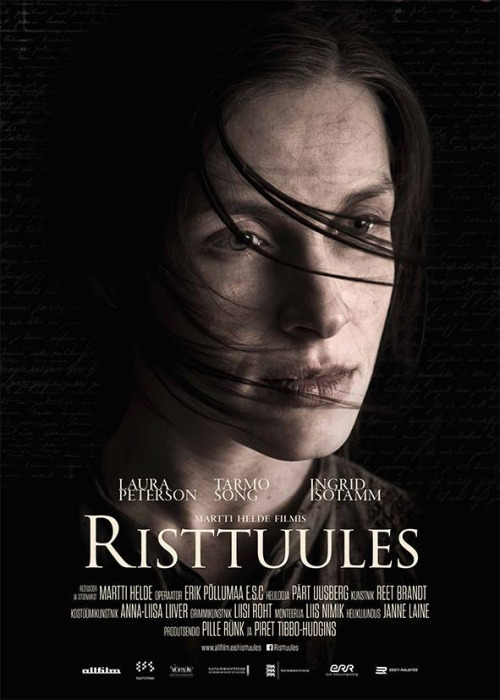
Risttuules (2014) - Review in english


75 years ago, in the early hours of June 14, 1941, more than 40,000 people were deported from Estonia, Latvia and Lithuania. That was the beginning of mass banishments to Siberia and other remote regions of the USSR promoted by the Soviet authorities. Under secret orders of Stalin, this operation was aimed to remove dissidents of the socialist regime from their home countries to quell any opposition, and promote ethnic cleansing of the region. Among these thousands of deportees was Erna Tamm (Laura Peterson) and his family (daughter and husband). The movie Risttuules (original title) or In the Crosswind (in english) was inspired by the letters of Erna written from Siberia to her husband, Heldur (Tarmo Song), from whom she was separated by the Soviets.

In his first movie, the estonian director Martti Helde was bold in its proposal: to make an art film, in black and white, through the technique of tableaux vivants, to photographically recreate the memories described in the letters. As opposed to the traditional cinematographic narrative, the tableaux vivant makes use of static shot, in which the characters stand still as the camera slowly travels through the environment. The observed time is frozen, allowing us to focus the subtle details of each scene as well as the expressions of the actors and their body language. Everything leads us to believe that we are facing a common photographic representation, which is only denied by the wind moving some objects, such as clothing, branches and leaves or sheets of paper. The voiceover of Laura Peterson complements the recreation of those memories describing events and the feelings of the protagonist.


Erna Tamm led a normal and happy life with her family until the war came into their lives. To portray this radical and abrupt change the time started to elapse in another dimension, being marked by the composition of tableaux vivants images. And it remained so until the end of this tragic and distressing period in the life of the protagonist, when the war came to an end. Throughout this journey we take notes of the Soviet cruelties, with the deportees being transferred in inhumane conditions inside animal wagons, suffering humiliations, being subjected to forced labor, hunger, cold, aside from the lost of relatives, friends and above all, their freedom. The soundtrack and ambient sounds help to characterize the mourning atmosphere and the melancholy of the film: almost all hope was lost.

The human tragedy experienced by the inhabitants of the Baltic countries resulted in more than 590,000 victims of the holocaust during the Soviet occupation. With the break up of the USSR, Russia, its successor, aside from maintaining a rhetoric that denies the crimes committed, even glorifies the Soviet past, its leaders, symbols and actions.


Aesthetically impeccable, made to be contemplated, as every work of art is intended to be, and with a slow pace, In the Crosswind is definitely not a film for the general public. The way it is narrated flee from the ordinary way and might not please everyone, causing strangeness and monotony in some viewers. Far beyond the story that is intended to be told, the film provides an unique sensory experience that is at the same time sad but beautiful.


Original title: Risttuules
English title: In the Crosswind
Director: Martti Helde
www.imdb.com/title/tt2534660/


Support : Creating Website | Johny Template | Mas Template
Copyright © 2011. Vikingbyheart - All Rights Reserved
Template Created by Creating Website Published by Mas Template
Proudly powered by Blogger